

Systems
Workload first. Hardware second.
Start with the work, the data, and the boundary. Then select the system that fits the site.
- Hardware
- Customer site
- AI runtime
- Locally operated
- Access
- Customer governed
- Acceptance
- Evidence based
Deployment classes
Pick a lane. Prove the final build.
Solo, Team, and Enterprise are planning lanes, not fixed boxes.
5–25 named users
Solo
A compact private-AI starting point for an executive team, proposal shop, engineering cell, or controlled pilot.
- Platform
- Professional tower or compact rackmount system
- Memory
- 48–128 GB accelerator memory; 96–192 GB unified-memory class where appropriate
- Concurrency
- Typically 1–5 active generations
- Models
- Fast small-to-mid local models; larger quantized models after validation
- Gemma 4 · 4B / 12B class
- Qwen · 8B–27B class
- Ministral / Mistral Small
- DeepSeek reasoning distills · 7B–32B
- Retrieval
- Workgroup knowledge base: thousands to low hundreds of thousands of indexed chunks
- Private chat and document Q&A
- Optional retrieval with source citations
- Local user administration
- Acceptance testing and operator handoff
20–150 named users
Team
A rack-mounted deployment for shared departmental use, stronger identity integration, and sustained internal workloads.
- Platform
- Enterprise rack server or paired rack systems
- Memory
- 96–384 GB aggregate accelerator memory; 192–512 GB unified-memory class
- Concurrency
- Typically 6–24 active generations
- Models
- Mid-to-large local models selected for shared quality and throughput
- Llama · 70B class
- Qwen · 27B / 35B-A3B class
- Gemma 4 · 31B / 26B MoE class
- Mistral Small class
- Retrieval
- Department knowledge estate: hundreds of thousands to several million indexed chunks
- Microsoft Entra ID or compatible SSO
- Governed retrieval and citations
- Role-based access and audit logging
- Monitoring, backup, and restore runbooks
150–500+ named users
Enterprise
A site-specific architecture for multiple workloads, larger concurrency targets, or specialized model requirements.
- Platform
- Multi-server rack architecture or segmented site deployment
- Memory
- 384 GB–1.5 TB+ aggregate accelerator or unified memory, workload dependent
- Concurrency
- 25–100+ active generations after workload validation
- Models
- A routed model portfolio selected per workflow, boundary, and service target
- Llama 4 Scout / Maverick class
- Large Qwen mixture-of-experts models
- Mistral Large class
- DeepSeek R1 / V3 class
- Specialized code, vision, OCR, and embedding models
- Retrieval
- Multi-domain knowledge estate: millions+ of indexed chunks with governed ingestion and permissions
- Site survey and capacity planning
- Network and identity architecture
- High-availability options where justified
- Phased rollout and operational enablement
Tier ranges are planning baselines, not guaranteed limits. Final capacity depends on model and quantization, context length, retrieval design, data volume, concurrent use, latency targets, licensing, facilities, and acceptance testing.
Not sure which tier fits?
Tell us seven things. Get a starting fit.
Users, demand, models, data, access, and resilience. We reply with a tier and what would change it.
One accountable delivery
More than a GPU server.
The value is in making hardware, software, access, data, and operations work as one controlled system.
Purpose-built hardware
A serviceable tower, rack server, or site-specific platform selected for the approved workload, not a generic SKU presented as a system.
Open-weight models
Models are evaluated against your use cases, capacity, quality threshold, and operating constraints before final selection.
Private interface
An internal web experience for approved users, published with private DNS and HTTPS inside the customer environment.
Grounded retrieval
Optional document retrieval turns approved internal knowledge into traceable answers with source citations.
Identity and access
Local accounts or enterprise identity, deliberate roles, and a defined path for office and approved remote access.
Operational handoff
Acceptance evidence, recovery procedures, operator training, and clear support boundaries are delivered with the system.
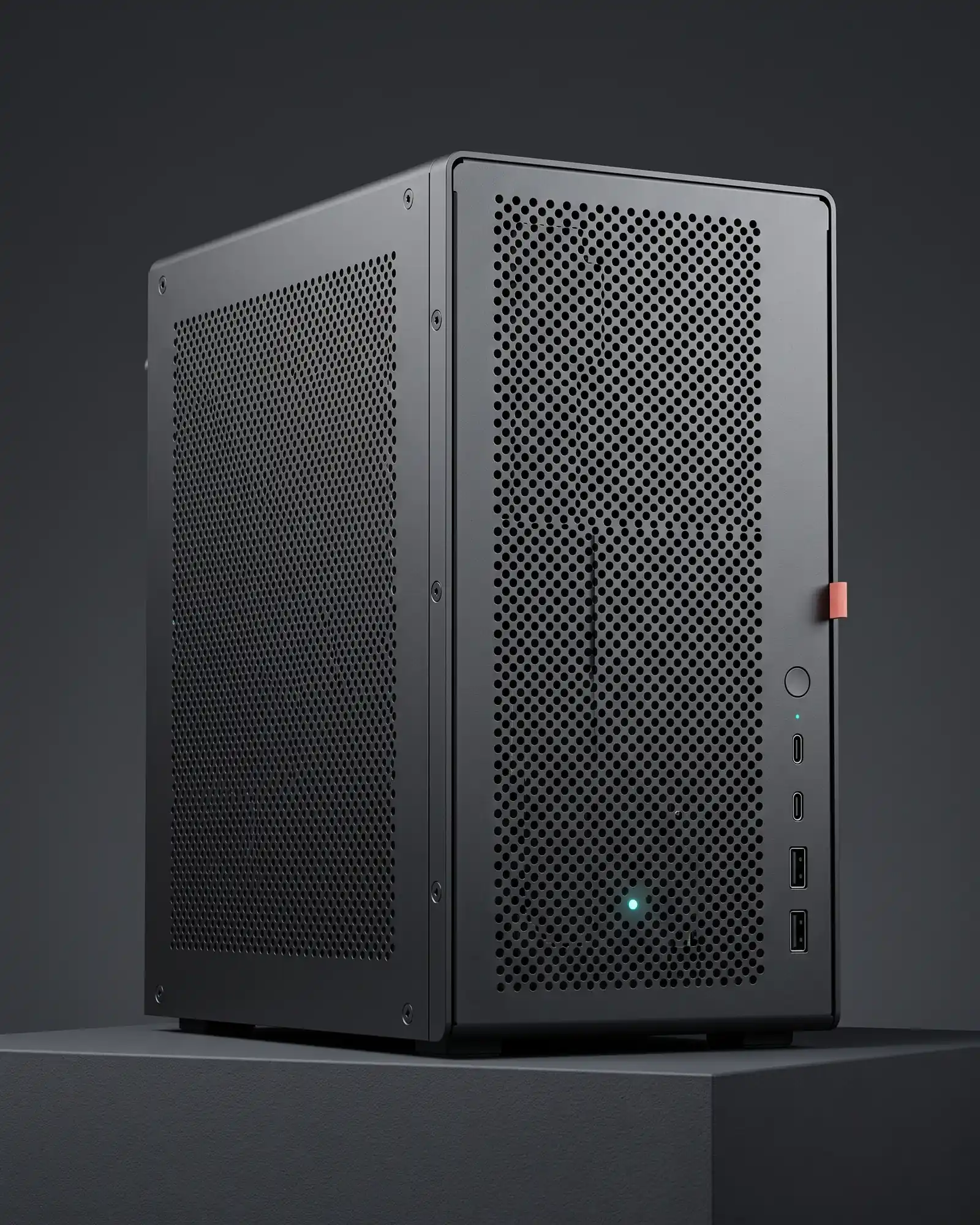
Built to be serviced
Hardware your IT team can open.
Every system is specified as serviceable equipment with standard parts, documented configuration, and an accessible chassis, so maintenance, upgrades, and warranty work stay inside your organization rather than depending on us.
See how a system is deliveredPilot
Start with one workload.
Tell us who uses it, what it can read, and what must stay inside. We will map the build.